


Honey & Roleplay AI Chatbot
4.6856.00 Reviews
App Specs
- Version
- 4.0.6
- Updated On
- License
- Free
- Downloads
- 100,000+
- Developer
- FOYA Dev
- Categories
- Lifestyle
- Platform
- Android
Screenshots





 Analysis by AppCompare
I approached Honey & Roleplay AI Chatbot as a casual lifestyle app rather than a conventional messaging service. Its central idea is simple: you create or enter an AI roleplay conversation and see where the exchange goes. That sounds familiar at first, but the real appeal is the freedom to treat a chat as a small interactive scene instead of a question-and-answer tool. I can write in character, change the mood, test a fictional situation, or simply have a conversation that does not require another person to be available.
That focus makes the app quite different from an ordinary AI assistant. A general assistant is usually at its best when I want a direct answer, a summary, or help completing a task. Here, the point is less about reaching a correct conclusion and more about maintaining a chosen conversational atmosphere. In my experience, that makes it entertaining for short sessions, especially when I want improvisation rather than productivity.
FOYA Dev presents it as a free lifestyle app, although optional purchases range from $1.99 to $49.99 per item. It is intended for mature users aged 17 and over, which matters because roleplay can move into adult themes or emotionally intense situations depending on how the conversation is guided. The app has reached over 100 thousand installs and holds a 4.6 average from around 9.9 thousand ratings, so it has clearly found an audience beyond a small experiment.
Why the roleplay capability matters
The most important capability is not merely that the app responds with AI-generated text. It is that the conversation is framed as a roleplay experience. That framing changes how I use it. Instead of asking, “What should I do?” I can approach a character, situation, or imagined relationship with a particular tone in mind. The same basic chat format can feel playful, dramatic, affectionate, mysterious, or exploratory depending on the opening message and the direction I give it.
This is useful when I want a low-pressure creative outlet. I can try a dialogue idea without worrying about whether another person finds it strange, or rehearse how a fictional character might react to a difficult moment. It can also work as a way to pass time when I want interaction but not the commitment of joining a live community. The exchange waits for me, and I can stop whenever I lose interest.
The strongest effect is the sense of conversational momentum. A static story gives me a fixed sequence, while a normal chatbot often pulls me toward practical answers. Roleplay sits between those experiences: I still influence the direction, but the response gives me something unexpected to react to. That back-and-forth is what makes the app more engaging than simply reading character profiles or browsing short fiction.
There is also a useful distinction between roleplay for entertainment and roleplay for self-expression. I would not treat the app as a therapist, personal adviser, or substitute for a trusted relationship. Its value is in creating a responsive fictional space. If I remember that boundary, the experience stays more enjoyable and I am less likely to expect emotional understanding or factual reliability that the format cannot guarantee.
Worth Reading Before You Choose

EA SPORTS FC Mobile 26 Is a Bigger Football Game, but It Takes Time

Flipboard Shows What News Apps Must Do Beyond the Feed

Switching to Android Auto Means Rethinking Your Driving Routine

Google Calendar Makes a Crowded Week Easier to Manage

Ludo King Makes the Most of the Minutes Between Plans

Baby Panda World Brings Quick Play to Modern Phones, but Its Game Library Feels Busy
How a conversation feels in practice
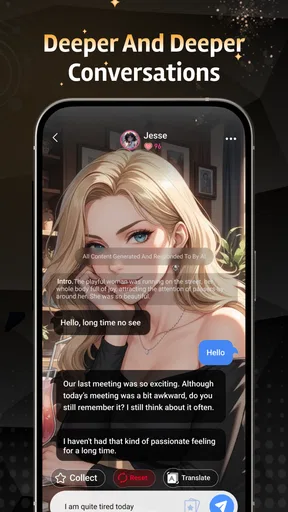
I get the best results when I begin with a clear intention rather than a vague greeting. A short opening that establishes who I am, what is happening, and the mood I want gives the exchange something to build on. For example, I might describe arriving late to a tense meeting, asking the character to keep the tone teasing, or setting a quiet scene where the conversation gradually becomes more personal. The more specific the starting point, the less likely the first reply feels interchangeable.
After that, I treat the chat like improvisation. I do not try to explain every possible direction in one message. Instead, I give the character one action or emotional cue at a time. If the response becomes too dramatic, I can bring it back down with a direct instruction. If it feels flat, adding a concrete detail usually helps more than repeating “be more interesting.” This is one of the practical lessons I took from using the app: roleplay quality depends heavily on the prompts I give it.
A helpful workflow is to separate scene direction from spoken dialogue. I can describe the setting or desired mood first, then write what my character says. That makes it easier to correct the tone without interrupting the fictional exchange. It also lets me experiment with different styles, such as a slow conversation, a playful argument, or a more dramatic reveal, without needing to restart immediately.
I found that shorter turns often work better than long blocks of explanation. Long messages can contain too many competing instructions, while a focused message gives the AI one clear thing to respond to. When I want a major change, I state it plainly: change the setting, make the character less confident, slow the pace, or stop the current theme. The app is more useful when I actively steer it instead of waiting for it to invent the entire experience.
That approach also answers a practical question many new users have: do I need to be a skilled writer to enjoy it? No, but I do need to be willing to guide the exchange. Even a simple instruction such as “keep this friendly and realistic” can be more effective than sending several unrelated questions. People who enjoy improvisation will probably settle into the format quickly, while users expecting a polished story to appear automatically may find the first few exchanges uneven.
A realistic everyday use case
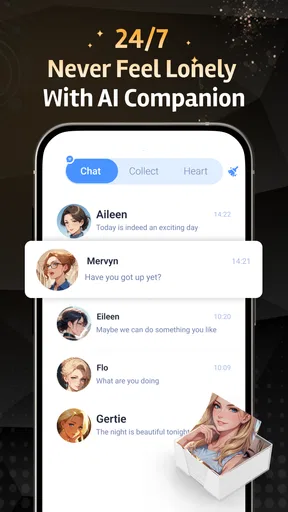
Imagine finishing a long day and wanting something more engaging than scrolling through short videos. I might open the app for a ten-minute fictional conversation, choose a relaxed scenario, and use it as a small creative break. I can start with a simple setting, respond to the character’s first reaction, and gradually turn the exchange into a scene. If I need to put my phone down, the activity does not depend on synchronizing with friends or finding an active group at that exact moment.
Another practical use is testing dialogue before writing a scene. I can play one side of a conversation and see whether the imagined response gives me a new direction. This does not replace editing or a writing tool, because the generated exchange may wander or repeat itself, but it can help me escape a blank page. The roleplay format is particularly useful when I want to hear how a conflict, confession, or misunderstanding might unfold interactively rather than outline it alone.
I can also see value for people who enjoy character-driven fantasy or romance but prefer participation to passive reading. The app lets me influence the pace and tone, which makes the experience feel personal. Still, I would keep expectations realistic: the appeal comes from the illusion of a responsive scene, not from a guaranteed long-form narrative with perfect continuity.
The tradeoff between freedom and consistency
The same openness that makes the app fun can make it unpredictable. A roleplay conversation may start with a strong mood and then drift if I introduce too many changes. Characters can also respond in ways that feel generic, overly agreeable, or inconsistent with the direction I had in mind. I see this as a normal limitation of AI roleplay, but it is important if I am looking for carefully controlled storytelling.
When continuity matters, I need to restate key details instead of assuming the conversation will preserve every nuance. A brief reminder of the relationship, setting, or emotional boundary can bring the exchange back into shape. This takes some effort, and it means the app is not completely hands-off. The best sessions feel collaborative: I provide the creative steering, and the AI supplies reactions and variations.
The mature rating is another meaningful tradeoff. The app is not aimed at children, and I would avoid treating it as a family-friendly chat space. Adults should still decide in advance what subjects they are comfortable exploring and stop a conversation when it crosses a personal line. The ability to engage in fictional scenarios does not remove the need for judgment, especially when a session becomes emotionally intense.
Cost is worth considering too. The app can be installed for free, which makes it easy to try without an upfront payment. However, optional purchases are available, and the upper end of the listed range is substantial for a casual chat experience. I would start with the free experience and only consider spending if the app becomes a regular part of my routine. Anyone who dislikes recurring temptation in free apps should pay attention to the purchase flow before committing time or money.
The current version is 4.0.6, and it runs on Android 7.0 or later. That broad compatibility is convenient for people using older Android devices, although compatibility alone does not guarantee the same smoothness on every phone. I would also remember that AI chat depends on an active connection and can be more demanding than a simple offline notes or reading app, so it is not my first choice when I want something that works entirely without network access.
How it compares with familiar alternatives
Compared with a standard AI assistant, Honey & Roleplay AI Chatbot is less useful for factual research, planning, or dependable task completion. If I need a shopping list, a concise explanation, or help checking wording, a general-purpose assistant is usually the better tool. This app makes more sense when the conversation itself is the destination.
Compared with interactive fiction, it offers more immediate freedom but less authorial control. A branching story normally gives me tested paths and a designed pace. Here, I can attempt almost any direction that fits the conversation, but the results may be less polished. I prefer the app when I want to improvise; I prefer interactive fiction when I want a coherent plot with deliberate choices.
Compared with social roleplay communities, it is more private and convenient in the sense that I am not waiting for another participant or negotiating someone else’s schedule. On the other hand, an AI cannot provide the genuine unpredictability, shared creativity, or human connection of a real partner. Someone seeking a community, lasting friendship, or collaborative writing relationship should look elsewhere.
That comparison clarifies the app’s best position. It is a flexible personal sandbox for fictional conversation. It is not a replacement for a messaging app, a dating service, a writing editor, or professional support. I would recommend it to a friend who wants playful interaction and understands those limits, not to someone searching for reliable advice or a real human bond.
Who gets the most from it
The best match is an adult who enjoys experimenting with tone, characters, and imagined situations. Writers may appreciate it as a dialogue sparring partner. Fans of roleplay can use it for quick scenes without organizing a group. Someone who simply wants a conversational distraction may enjoy it as long as they are comfortable guiding the AI when the replies become repetitive or wander off course.
I would be more cautious recommending it to users who want strict privacy expectations, perfectly consistent character memory, or a completely free experience with no purchase prompts. I would also skip it for younger users because of the mature age rating. People who find AI conversations emotionally confusing may prefer a conventional creative app, a book, or a multiplayer activity with clear human boundaries.
One of my practical tips is to decide the purpose of a session before starting: entertainment, dialogue practice, scene development, or simple companionship-like conversation. That small decision helps me judge the result fairly. A session can be successful even if it does not produce a polished story, because the goal may have been to generate ideas or enjoy a few unexpected replies.
Another tip is to use deliberate resets. If a conversation becomes tangled, I would rather summarize the scene in a fresh message or begin a new scenario than spend several turns arguing with the previous direction. This keeps the experience lighter and reduces the frustration of trying to force a chat back into a shape it has already lost.
Finally, I would treat spending as optional experimentation, not as a requirement for deciding whether the concept suits me. The free entry point is enough to understand the basic appeal. If I find myself using it often and the available purchases add value for my particular habits, I can make that decision later. If not, I have lost little by trying it carefully.
My final impression
Honey & Roleplay AI Chatbot succeeds because it gives AI conversation a clear purpose: not just answering, but participating in an imagined exchange. That focus makes it more engaging than a plain assistant for creative and recreational chats, while also exposing the usual weaknesses of generated dialogue. I enjoyed it most when I supplied a specific setup, kept my turns focused, and accepted that the experience would be improvised rather than perfectly scripted.
FOYA Dev has built something that can fit neatly into a short break, a writing session, or an evening of character experimentation. Its free availability makes trying it straightforward, but the mature audience and optional purchases deserve attention before regular use. With its 4.6 average and more than 100 thousand installs, it is clearly resonating with users who want this kind of interactive conversation.
My recommendation is straightforward: try it if you want a flexible fictional chat and are happy to guide the AI yourself. Skip it if you need dependable information, a real person, a fully authored story, or a completely controlled experience. For the right user, the app is most enjoyable when treated as a creative conversation partner rather than an all-purpose assistant.
Pros
- Offers immersive roleplay conversations with customizable AI characters.
- Supports creative storytelling across multiple scenarios and personalities.
- Easy-to-use chat interface suitable for casual
- ongoing conversations.
- Can provide companionship and entertainment without requiring another person.
- Character interactions may inspire writing ideas
- dialogue
- and imaginative play.
Cons
- AI responses can become repetitive or lose consistency during longer chats.
- Some features or characters may require a subscription or in-app purchases.
- Generated content may occasionally be inaccurate
- awkward
- or contextually inappropriate.
- Privacy terms should be reviewed before sharing personal or sensitive information.
- Roleplay quality depends heavily on the selected character and prompt details.
FAQs for Honey & Roleplay AI Chatbot
What is Honey & Roleplay AI Chatbot?
Honey & Roleplay AI Chatbot is an AI-powered conversation app designed for interactive chats and character-based roleplay. Users can communicate with virtual personalities, explore different scenarios, and create conversations that feel more personalized than a standard assistant. The experience focuses mainly on entertainment, storytelling, and companionship rather than providing professional advice or replacing real human interaction.
Can I create or customize characters in Honey & Roleplay AI Chatbot?
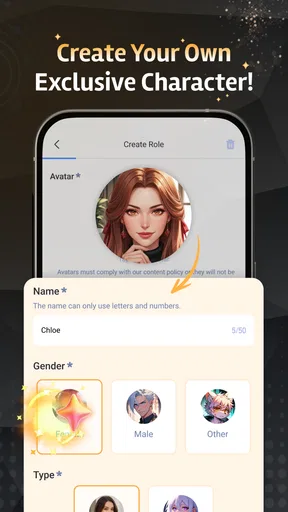
The app is built around personalized roleplay, so character customization is an important part of the experience. Depending on the available version, users may be able to select existing personalities, adjust conversational preferences, or create characters with specific traits, backgrounds, and speaking styles. More advanced customization options may be restricted by account type, credits, subscriptions, or other in-app limitations.
Is Honey & Roleplay AI Chatbot free to download and use?
Honey & Roleplay AI Chatbot may be available to download at no initial cost, but free access does not necessarily include every feature. Some conversations, premium characters, customization tools, message limits, or additional AI functions can require in-app purchases or a subscription. Before starting a trial or payment, check the current store listing carefully for pricing, renewal terms, and cancellation instructions.
Is the content in Honey & Roleplay AI Chatbot suitable for children?
Parents should review the app’s official age rating and privacy information before allowing a child to use it. AI roleplay platforms can generate mature, romantic, emotionally intense, or otherwise unsuitable conversations depending on the selected character and user prompts. Even when safety filters are present, automated responses are not always predictable, so adult supervision and appropriate device restrictions are recommended for younger users.
Does Honey & Roleplay AI Chatbot protect my conversations and personal information?
Users should avoid sharing sensitive information such as passwords, financial details, exact addresses, private photographs, or identifying personal data during AI conversations. Chats may be processed or stored to operate, moderate, and improve the service, depending on the provider’s policies. Before using the app extensively, read its privacy policy, understand data-retention practices, review account controls, and remember that an AI character is not a confidential human counselor.


